NASA IN THE PENTAGON'S UFO FILES: WHAT 40 DECLASSIFIED ASTRONAUT RECORDS REALLY SAY
Since May 2026 the Department of War has published 40 NASA files in its PURSUE UAP archive, from John Glenn's "fireflies" to an Apollo 17 photo now under official investigation. We read and reviewed them all. Our guide to the series.
When the U.S. Department of War opened its PURSUE UAP archive on May 8, 2026, one of the agencies on the list surprised many readers: NASA. Since then the archive has published 40 NASA records: crew transcripts and debriefings, audio recordings, and photographs from Mercury, Gemini, Apollo, Skylab and the Space Shuttle. Many of these sightings have been told and retold for decades, often inaccurately. Now the primary sources are public, so we read the documents, reviewed the descriptions of the recordings and examined the photographs. This page is the guide to our series.
Source: NASA / U.S. Department of War, PURSUE UAP archive (war.gov/UFO).
1. Mercury and Gemini: from Glenn's fireflies to Borman's bogey
This article covers NASA's 1962–63 scientific paper trail on John Glenn's "fireflies", solved when Scott Carpenter knocked on his capsule wall. It also covers a curtain of light rising towards Gemini 4 over Australia, Pete Conrad's green "aurora type light", a satellite Gemini 5 "never could identify", and the original transcript of Frank Borman's "bogey at ten o'clock high" on Gemini 7.
Read: From Glenn's fireflies to Borman's bogey →
2. Apollo: the "open suitcase", flashes in the cabin and "something physical in the distance"
This article covers the Apollo 11 debriefing in which Armstrong, Aldrin and Collins describe an L-shaped object they never identified, Aldrin's flashes "zapping through the cabin", Alan Bean's particles "escaping the Moon", and Apollo 17's rotating flasher and flash on the lunar surface.
Read: The Apollo files in PURSUE →
3. Photos and Skylab: three dots over Taurus-Littrow, a red object and a tumbling rod
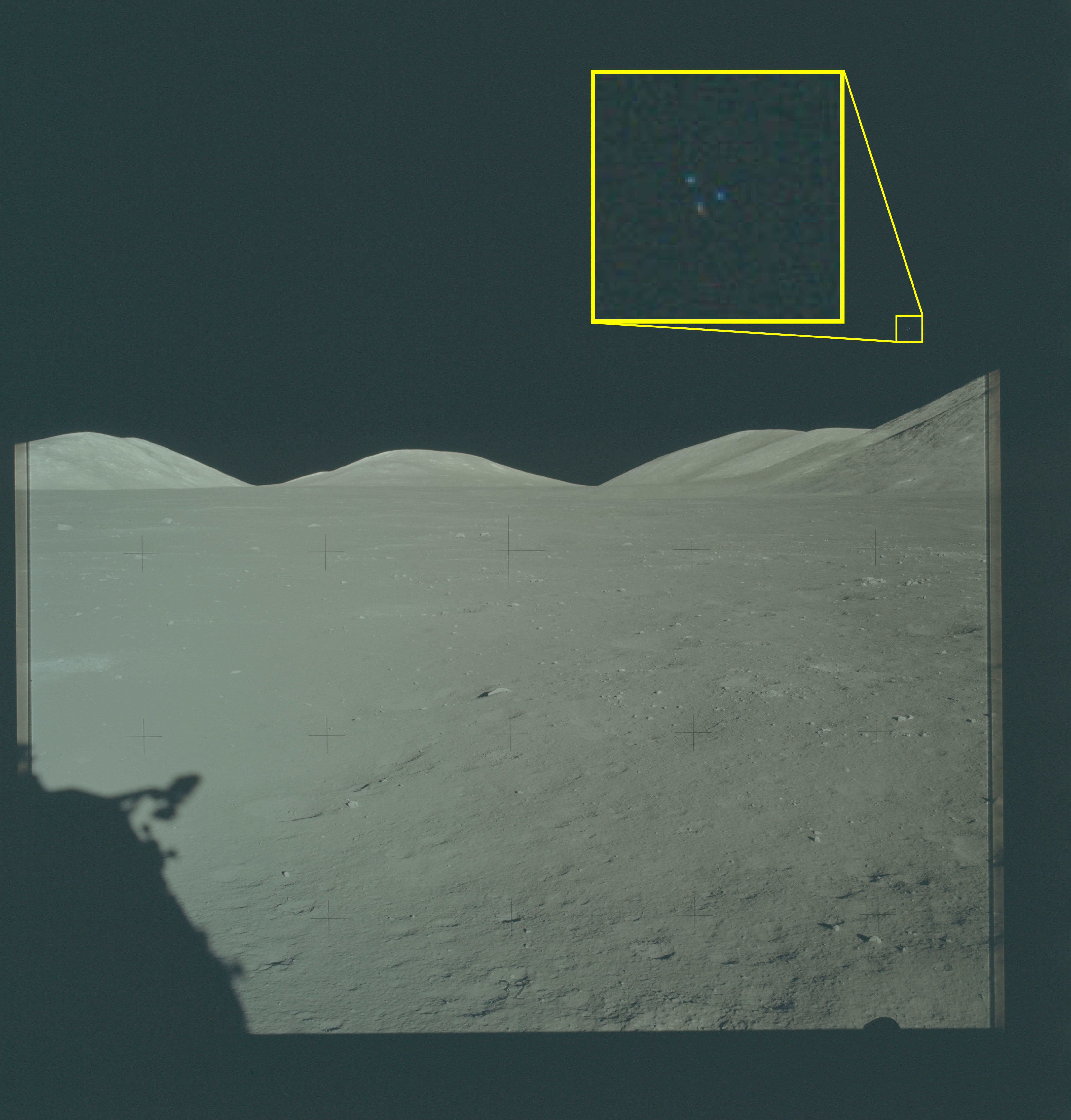
This article covers the Apollo 17 photograph the Department of War has formally opened a case on, after obtaining the original film; the Apollo 12 lunar-sky "areas of interest"; three Space Shuttle photographs of a tumbling object from 1996; and the reddish object the Skylab 3 crew tracked and that "no one ever explained to us".
Read: The NASA photos and Skylab's red object →
The NASA files at a glance
- 40 records across releases 1 to 4: PDFs, audio recordings and images.
- Missions: Mercury-Redstone 4, Mercury-Atlas 6 to 9, Gemini 4, 5, 7 and 9, Apollo 11, 12, 14, 16 and 17, Skylab 2, 3 and 4, and STS-80.
- Strongest unresolved items in the documents: the Apollo 11 "open suitcase", the Skylab 3 red object, Borman's Gemini 7 bogey and the Apollo 17 three-dot photo, which is an open Department of War case.
- Explained at the time: the "fireflies" (ice and frost from the spacecraft), most particles and fragments (boosters, panels, water and urine dumps), and the light flashes (cosmic rays hitting the retina).
A curious extra: the COMETA report in NASA's files
One of the files tagged NASA is not a mission document at all. It is a 2001 package delivered by Carol Rosin, founder of the Institute for Security and Cooperation in Outer Space, who says she was Wernher von Braun's spokesperson in his last years, and actor Jon Cypher. It contains the English translation of the French COMETA report, "UFOs and Defense: What Should We Prepare For?" (1999), written by a private association of retired French officials and experts. It is interesting history, but it is not an official French or NASA report.
How to read the NASA files
The astronauts emerge from these documents as careful observers. They report what they see, propose explanations on the spot and admit when they have none. The PURSUE archive labels many of these items as unidentified phenomena, but the documents themselves often contain the explanation. Our articles always separate what the documents say from later interpretations.
All NASA records can be searched on the official portal: WAR.GOV/UFO – NASA files. See also our coverage of the latest release: Pentagon's eighth UFO file release.